












How Big Should Creates Be For Dogs
According to the RSPCA, a dog's crate should be large enough for them to stand up, turn around, lie down, and stretch out comfortably. This simple guideline shows why crate size plays such an important role in your dog's comfort and wellbeing. Choosing the right crate is about much more than simply buying one that looks suitable. The size of the crate can affect how secure your dog feels, how successful crate training is, and how willing your dog is to use the space on a daily basis.
If you are wondering how big a crate should be for a dog, you are not alone. Many dog owners find themselves unsure whether they should choose a smaller crate that feels cosy or a larger crate that gives their dog more room. The answer lies somewhere in between.
A crate should provide enough space for your dog to move comfortably without feeling restricted. At the same time, it should still feel like a safe and secure den. Dogs naturally seek out sheltered spaces where they can relax and rest, which is why many dogs enjoy spending time in a crate when it has been introduced properly.
Many owners also ask, what is the ideal crate size for my dog? The answer depends on your dog's measurements, breed, age, and whether you are purchasing a crate for a puppy or a fully grown adult dog.
In this guide, we will explain everything you need to know about how big a crate should be for a dog, including how to measure your dog correctly, how to choose the right size crate, what mistakes to avoid, and how to create a positive crate experience for your pet.
What Size Dog Crate Does My Dog Need?
One of the most common questions owners ask is, what is the ideal crate size for my dog? While breed recommendations can provide a useful starting point, the most accurate method is always to measure your dog.
Your dog should be able to stand up without their head touching the roof of the crate. They should also be able to turn around comfortably, sit in a natural position, and stretch out fully when lying down. If your dog struggles to perform any of these movements, the crate is likely too small.
Many people assume a larger crate is always better, but that is not necessarily true. Dogs often feel more comfortable in spaces that feel secure and enclosed. A crate that is excessively large can sometimes feel less comforting and may make house training more difficult for puppies.
When considering how big a crate should be for a dog, the aim is to provide enough room for comfort while maintaining a den-like environment where your dog feels safe.
Why Crate Size Matters for Your Dog
The size of a crate can have a direct impact on your dog's comfort, behaviour, and training progress.
A crate that is too small can make your dog feel cramped and uncomfortable. They may struggle to settle, avoid entering the crate, or become restless while inside. Over time, this can create negative associations with the crate and make training more difficult.
A crate that is too large can also cause problems. While adult dogs may simply spread out and enjoy the extra room, puppies may use one section as a sleeping area and another as a toilet area. This can slow down toilet training because it removes one of the natural benefits of crate training.
Many owners searching for what is the ideal crate size for my dog are surprised to learn that crate size is about balance rather than maximum space. The right crate creates a comfortable environment where your dog can relax, sleep, and feel secure.
How to Measure Your Dog for the Right Crate Size
If you want an accurate answer to how big a crate should be for a dog, measuring your dog is the first step.
Begin by measuring your dog's length while they are standing on all four paws. Measure from the tip of their nose to the base of their tail. Avoid including the tail itself as this can result in selecting a crate that is larger than necessary. Once you have this measurement, add approximately 5 to 10 centimetres to allow for comfortable movement.
Next, measure your dog's height while they are sitting. Measure from the floor to the highest point of their head. For dogs with upright ears, measure to the tip of the ears. Again, add several centimetres to provide enough clearance.
Using these measurements allows you to choose a crate based on your dog's actual size rather than relying solely on breed recommendations. This is particularly useful for mixed breeds, dogs that fall outside typical breed standards, or puppies that are still growing.
Dog Crate Size Chart and Breed Guide
Although measurements should always take priority, breed guides can help provide a starting point when shopping for a crate.
Smaller breeds such as Chihuahuas, Yorkshire Terriers, Maltese, and Shih Tzus often fit comfortably in 24-inch crates. Medium-sized breeds including Beagles, French Bulldogs, Miniature Dachshunds, and Border Terriers are commonly suited to 30-inch crates.
Larger breeds such as Cockapoos, Springer Spaniels, and Bulldogs frequently require 36-inch crates, while Labradors, Golden Retrievers, Dalmatians, and Labradoodles often need 42-inch crates.
Extra-large breeds such as German Shepherds, Bernese Mountain Dogs, Greyhounds, and Rottweilers may require 48-inch crates or larger depending on their measurements.
If you are still asking what is the ideal crate size for my dog, remember that breed guides should only be used as a rough indication. Measuring your individual dog will always provide a more accurate answer.
Once you have measured your dog and identified the most suitable size, you can browse our range of dog crates to find an option that suits your dog's needs and your home setup.
Can a Dog Crate Be Too Big or Too Small?
Yes, a dog crate can be both too big and too small, which is why choosing the correct size is so important.
A crate that is too small can affect your dog's comfort and willingness to use the space. If your dog cannot stand up properly, turn around comfortably, or stretch out when resting, the crate is unlikely to feel like a relaxing place to spend time. Over time, this can lead to frustration and make crate training more difficult.
On the other hand, a crate that is too large may not provide the sense of security that many dogs naturally enjoy. Puppies in particular may struggle with an oversized crate because they can easily separate their sleeping area from their toilet area. This can slow down house training and create unwanted habits.
If you are asking what is the ideal crate size for my dog, the answer is usually a crate that allows comfortable movement without providing excessive unused space.
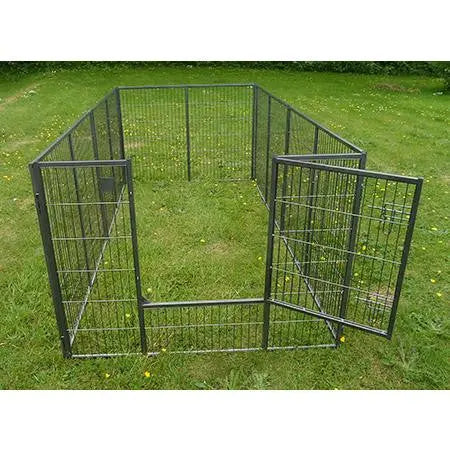
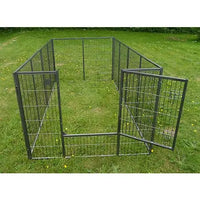
What Are Dog Crates and Playpens Used For?
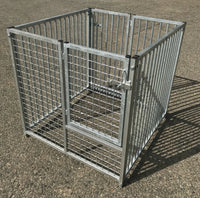
Dog crates can be used for training, travel, recovery after surgery, and providing a quiet place for your dog to rest. If you are unsure whether a crate is right for your dog, our guide on the benefits of using crates and car crates for your dog explains how crates can support both safety and wellbeing at home and when travelling.
For puppies, crates are commonly used as part of toilet training and to help establish routines. Because dogs naturally avoid soiling their sleeping area, a correctly sized crate can encourage puppies to hold their bladder until they are taken outside.
For adult dogs, crates often become a quiet place where they can relax away from household activity. Many dogs choose to spend time in their crate even when the door is left open because they see it as a safe and familiar space.
Crates can also be useful during travel, after veterinary procedures that require restricted movement, or when introducing a new dog to the home. When used correctly, they can help provide structure and security without limiting your dog's freedom unnecessarily.
How to Crate Train a Dog or Puppy
Crate training should always be approached gradually and positively. The goal is to help your dog see the crate as a pleasant place rather than somewhere they are forced to stay.
Many dogs naturally learn to enjoy their crate when it is introduced patiently. Rushing the process can create anxiety and make your dog reluctant to enter the crate in future.
Building positive associations through treats, toys, praise, and comfortable bedding can help your dog feel relaxed and confident in their new space.
Introducing Your Dog to the Crate
The first step is simply allowing your dog to investigate the crate at their own pace.
Place the crate in a room where your family spends time and leave the door open. Add comfortable bedding and a few favourite toys to make the crate feel inviting.
Rather than forcing your dog inside, encourage them to explore by placing treats near the entrance and gradually moving them further into the crate. Many dogs will begin entering voluntarily once they realise good things happen there.
Keep early sessions short and positive. The aim is to build curiosity and confidence without creating pressure.
Increasing Time Spent in the Crate
Once your dog is happy entering the crate, you can begin increasing the amount of time they spend inside.
One of the easiest ways to do this is by feeding meals in the crate. Start by placing the food bowl near the entrance and gradually move it further inside over several days.
As your dog becomes more comfortable, gently close the crate door while they eat and open it again once they have finished. Gradually increase the amount of time the door remains closed, always making sure your dog remains relaxed.
Providing long-lasting chews or enrichment toys can help create positive experiences and keep your dog occupied while they are in the crate.
Leaving Your Dog Alone in the Crate
Once your dog is comfortable spending short periods in the crate with the door closed, you can begin practising brief absences.
Start by stepping away for a few moments before returning calmly. Gradually increase the amount of time you are out of sight while monitoring your dog's comfort level.
Avoid making a big fuss when leaving or returning, as this can increase anticipation and excitement. Keeping arrivals and departures calm helps your dog understand that being alone for short periods is a normal part of daily life.
It is important to remember that crates are not designed for long-term confinement. Dogs still need regular exercise, social interaction, mental stimulation, and opportunities to explore their environment.
Conclusion: How Big Should Crate Be For Dog?
In conclusion, how big a crate should be for a dog depends on their size, age, breed, and individual needs. The right crate should provide enough space for your dog to stand, turn around, sit comfortably, and stretch out while still feeling safe and secure. Measuring your dog is the most reliable way to choose the correct size, and puppies often benefit from crates with adjustable dividers that can grow with them. With the right crate size, a positive training approach, and a comfortable setup, your dog can enjoy a space that supports rest, relaxation, and security. For more expert advice on dog care, training, health, and wellbeing, visit Dog Health.
FAQs About How Big Should Crate Be For Dog
What is the ideal crate size for my dog?
The ideal crate size allows your dog to stand up, turn around, sit comfortably, and stretch out when lying down. Measuring your dog's height and length will provide the most accurate guide.
How much room should a dog have in a crate?
A dog should have enough room to move comfortably without excessive unused space. The crate should feel secure while still allowing natural movement and relaxation.
Should I buy a larger crate for my puppy?
It is often best to buy a crate that suits your puppy's expected adult size and use a divider to adjust the available space as they grow.
Is it okay for a dog to sleep in a crate every night?
Many dogs happily sleep in crates every night, provided the crate is comfortable, correctly sized, and associated with positive experiences.
Share
